The Business Case for Epoxy Flooring
For commercial and industrial property owners, flooring is not just an aesthetic choice — it is a critical infrastructure investment. The floor is the most heavily used surface in any commercial building, enduring constant traffic from employees, customers, equipment, and vehicles. A failing floor creates safety hazards, increases maintenance costs, and projects an unprofessional image.
Commercial epoxy flooring addresses all of these concerns. It provides a seamless, high-performance surface that protects the concrete substrate, reduces long-term maintenance costs, and creates a clean, professional environment. From retail showrooms to manufacturing facilities, epoxy coatings deliver measurable business value.
Industries That Benefit from Epoxy Flooring
Epoxy flooring systems are engineered for demanding environments across virtually every industry:
Automotive and Aviation
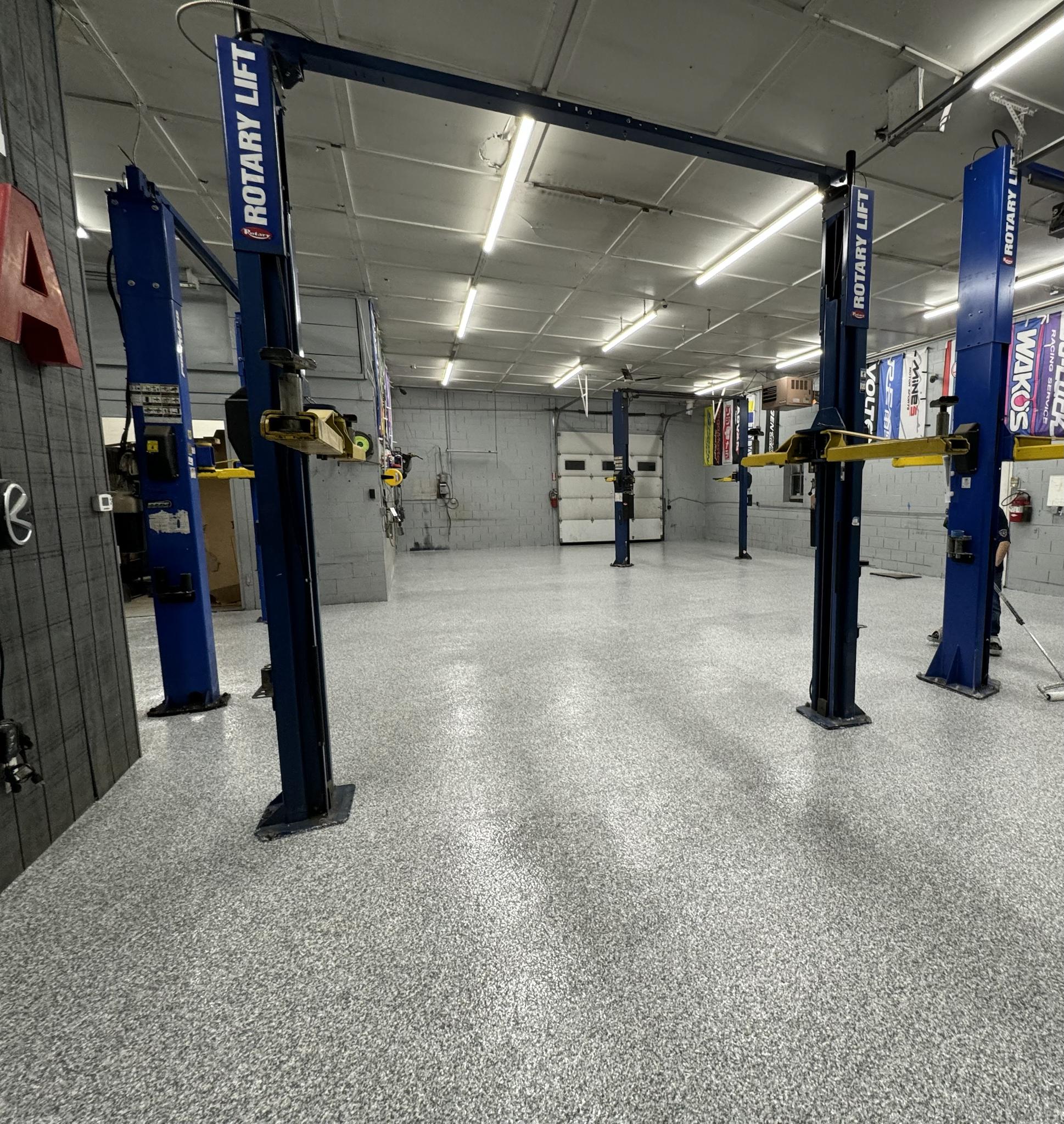
Auto dealerships, repair shops, hangars, and service centers require floors that resist oil, hydraulic fluid, brake cleaner, and heavy equipment. Epoxy coatings with chemical-resistant topcoats protect the slab while maintaining a clean, professional appearance that impresses customers.
Healthcare and Pharmaceutical
Hospitals, clinics, laboratories, and pharmaceutical facilities demand sterile, seamless surfaces that are easy to sanitize. Epoxy floors eliminate grout lines and porous surfaces where bacteria and contaminants can harbor. Electrostatic dissipative (ESD) epoxy systems are also available for sensitive electronic environments.
Food Service and Processing
Commercial kitchens, breweries, food processing plants, and restaurants require floors that meet health code standards. Epoxy and urethane cement systems provide seamless, non-porous surfaces that resist food acids, thermal shock, and aggressive cleaning chemicals. Epoxy cove base systems create integrated wall-to-floor transitions that eliminate harborage points.
Warehousing and Distribution
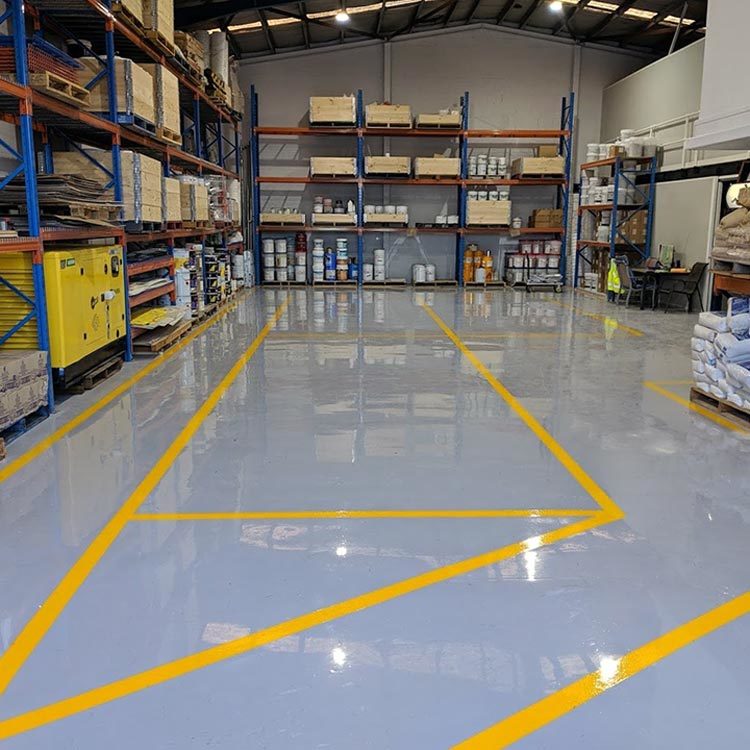
Warehouses and distribution centers need floors that withstand forklift traffic, pallet loads, and constant abrasion. High-build epoxy systems with quartz or sand broadcast provide the durability and slip resistance needed for safe, efficient operations.
Retail and Showrooms
Retail spaces, car dealerships, and showrooms benefit from the visual impact of decorative epoxy systems. Metallic epoxy and decorative flake coatings create stunning floors that enhance the customer experience while providing the durability needed for high foot traffic.
Choosing the Right Commercial System
Selecting the appropriate epoxy system for a commercial application requires evaluating several factors:
Traffic Type: Is the floor subject to foot traffic only, or does it need to support forklifts, pallet jacks, and heavy equipment? High-traffic industrial floors typically require thicker, more abrasion-resistant systems like quartz broadcast or urethane cement.
Chemical Exposure: What chemicals will contact the floor? Standard epoxy systems resist most common chemicals, but environments with aggressive acids, solvents, or extreme pH levels may require specialty formulations like urethane cement or novolac epoxy.
Temperature Extremes: Will the floor be exposed to thermal shock from hot water, steam cleaning, or freezer environments? Urethane cement systems are specifically engineered for thermal cycling and extreme temperature resistance.
Slip Resistance: Safety is critical in commercial environments. Textured systems with quartz or sand aggregate provide excellent slip resistance, even when wet. Slip-resistant additives can also be incorporated into topcoats for smooth systems.
Aesthetics: Does the floor need to project a specific image? Retail and customer-facing spaces often choose decorative flake or metallic systems, while back-of-house and industrial areas prioritize function over appearance.
Return on Investment
Commercial epoxy flooring delivers strong ROI through several channels:
Reduced Maintenance Costs: Seamless epoxy surfaces are dramatically easier and less expensive to clean than tile, carpet, or bare concrete. No grout maintenance, no waxing, no refinishing. Routine sweeping and mopping are typically all that is required.
Extended Floor Lifespan: A properly installed commercial epoxy system can last 10–20 years depending on the application. This far exceeds the lifespan of carpet, vinyl, or untreated concrete in similar environments.
Improved Safety: Slip-resistant epoxy coatings reduce the risk of slips and falls — one of the most common and costly workplace accidents. High-visibility line markings and safety zones can be integrated directly into the coating system.
Enhanced Property Value: A professional epoxy floor improves the overall appearance and perceived value of a commercial property. This is particularly valuable for retail spaces, showrooms, and facilities that host clients or customers.
Regulatory Compliance: In food service, healthcare, and pharmaceutical environments, seamless flooring systems help meet health code and regulatory requirements. Epoxy cove base systems provide integrated, sanitary wall-to-floor transitions.
Minimizing Business Disruption
One of the biggest concerns for business owners is the disruption caused by a flooring installation. Professional commercial epoxy installers understand this and work to minimize downtime:
Commercial Epoxy in New England
Epoxy Designs serves commercial and industrial clients throughout New England. We have experience with facilities of all sizes — from small retail spaces to large-scale warehouses and manufacturing plants. Our team handles full project management including surface preparation, moisture mitigation, system design, and multi-phase installation.
Contact us today for a free on-site consultation and estimate. We will evaluate your facility, discuss your performance requirements, and recommend the right system for your business.