Why Garage Epoxy Is the Best Investment for Your Home
Your garage floor endures more abuse than almost any other surface in your home. It supports the weight of vehicles, absorbs impacts from dropped tools, and is constantly exposed to oil, chemicals, road salt, and temperature extremes. Despite this, most homeowners leave their garage floors as bare, untreated concrete — a surface that stains, cracks, dusts, and deteriorates over time.
Garage epoxy flooring transforms this neglected surface into a durable, attractive, and functional space. A professional epoxy coating creates a seamless barrier over the concrete that resists chemicals, impacts, abrasion, and moisture while dramatically improving the appearance of the space.
Understanding Garage Epoxy Systems
Not all garage epoxy coatings are created equal. The quality of the system — and the results you get — depends on the materials, preparation, and installation process. Here are the most common garage epoxy systems:
Solid-Color (Neat) Epoxy
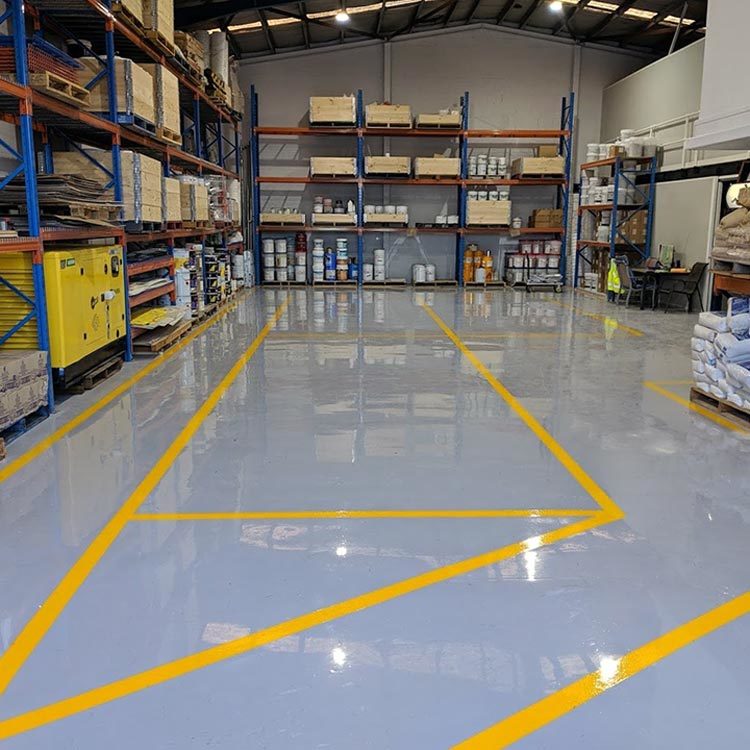
A clean, uniform coating in a single color. Neat epoxy provides excellent protection and a smooth, professional finish. It is the most cost-effective option for homeowners who want durability without decorative elements.
Decorative Flake Epoxy
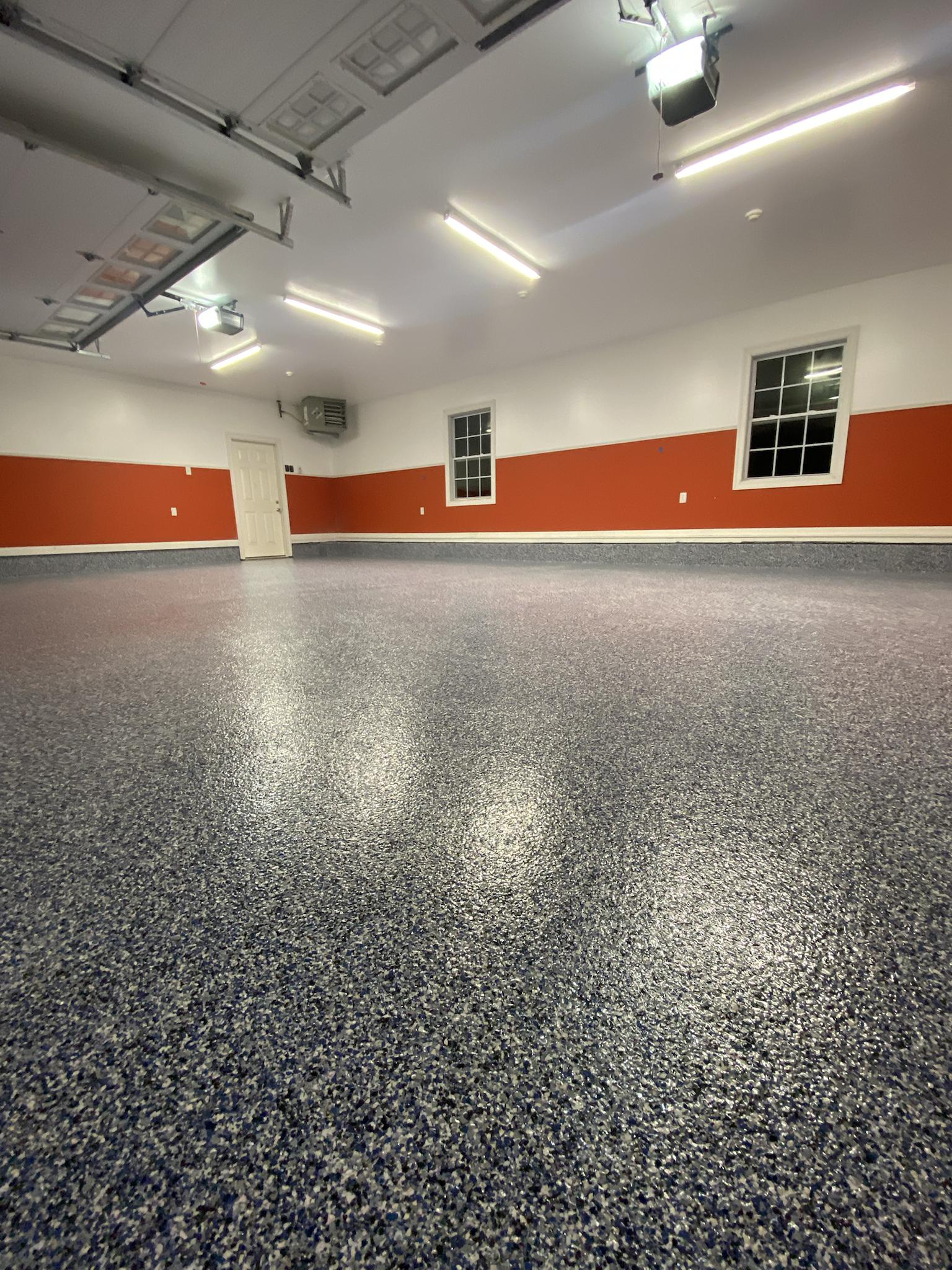
The most popular residential garage system. Flake epoxy involves broadcasting colored vinyl flakes into the wet epoxy base, creating a textured, multi-colored finish that hides imperfections and provides slip resistance. Available in a wide range of color blends to match any style.
Quartz Broadcast Epoxy
Uses colored quartz aggregate for a textured, highly durable surface. Quartz systems offer superior slip resistance and abrasion protection. They are ideal for garages that double as workshops or heavy-use areas.
Metallic Epoxy
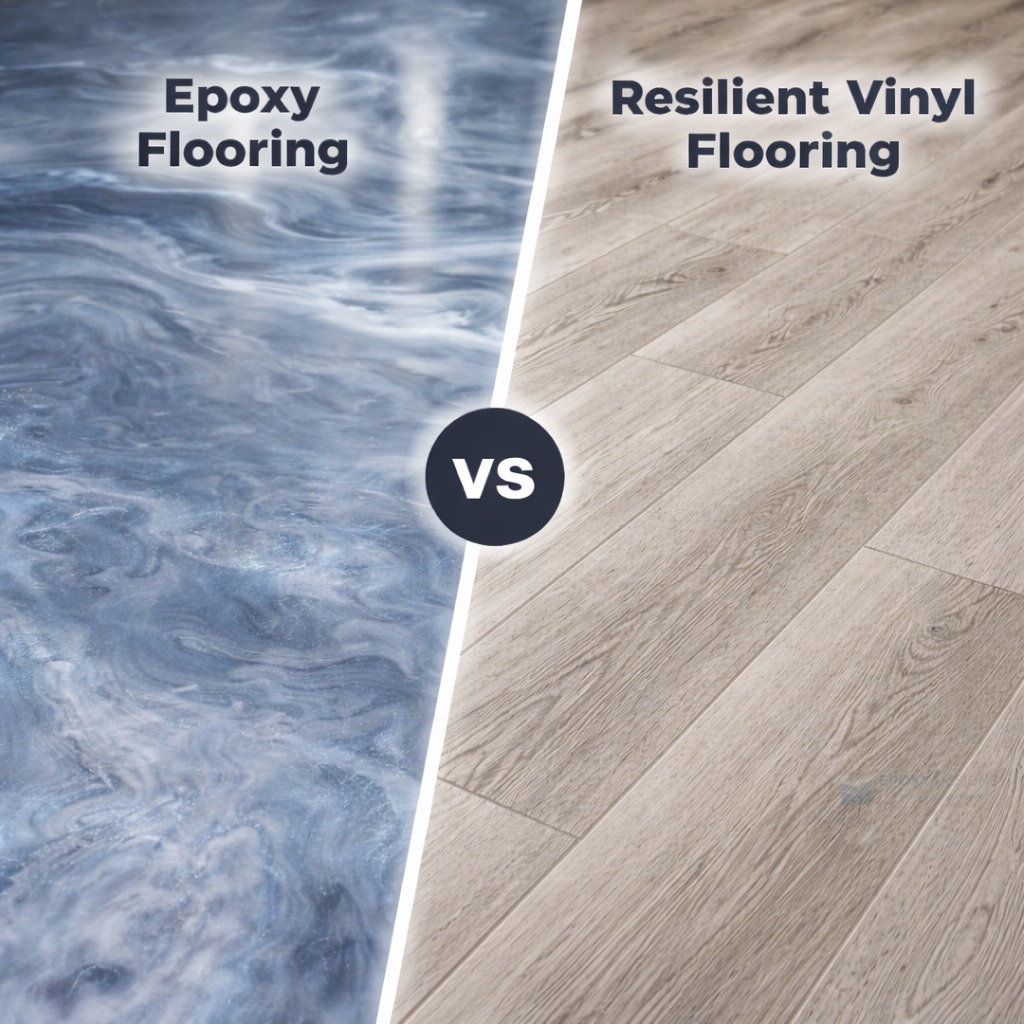
Creates stunning, one-of-a-kind flowing patterns with a high-gloss, reflective finish. Metallic epoxy is the premium choice for homeowners who want their garage to make a visual statement. Each installation is unique due to the natural movement of metallic pigments during application.
The Importance of Surface Preparation
Surface preparation is the single most important factor in the success of a garage epoxy installation. No matter how premium the coating materials are, they will fail if applied over an improperly prepared surface.
Professional preparation typically involves:
Diamond Grinding: Industrial diamond grinders mechanically profile the concrete surface, opening the pores and creating a rough texture that allows the epoxy to bond at a molecular level. This is far superior to acid etching, which is unreliable and inconsistent.
Crack and Joint Repair: Cracks, spalls, and expansion joints are filled and repaired before coating. This prevents defects from telegraphing through the finished floor.
Moisture Testing: Concrete naturally contains moisture. Excessive moisture vapor transmission can cause epoxy to delaminate. Professional installers test the slab and, if necessary, apply moisture mitigation systems before coating.
Contaminant Removal: Oil stains, tire marks, paint, and other contaminants are removed to ensure a clean bonding surface. Embedded contaminants can prevent proper adhesion.
What to Expect During Installation
A professional garage epoxy installation in New England typically follows this process:
Day 1 — Preparation: The team arrives with industrial equipment to grind, clean, and prepare the concrete. All cracks and defects are repaired. The slab is vacuumed and inspected for moisture and adhesion readiness. This is the most labor-intensive phase.
Day 1–2 — Coating Application: The primer coat is applied first, followed by the body coat with any decorative elements (flake, quartz, or metallic pigments). Each layer must cure before the next is applied. Temperature and humidity are monitored throughout.
Day 2–3 — Topcoat: A clear polyaspartic or urethane topcoat is applied for UV protection, chemical resistance, and abrasion durability. This is the final protective layer that determines the floor's long-term performance.
Cure Time: Light foot traffic is typically allowed within 24–48 hours. Vehicle traffic is usually permitted after 5–7 days, depending on the system and conditions.
New England-Specific Considerations
Garage epoxy installations in New England require attention to regional factors:
Temperature: Epoxy products have minimum application temperatures, typically 50°F for both ambient air and concrete surface. Installations are best scheduled during spring, summer, or early fall. Winter installations may require temporary heating.
Freeze-Thaw Cycles: New England winters subject garage floors to repeated freeze-thaw cycles. A properly installed epoxy system with moisture mitigation protects the slab from water intrusion that causes spalling and cracking during freeze-thaw events.
Road Salt and De-Icers: Vehicles track road salt and chemical de-icers into the garage throughout winter. Epoxy floors with polyaspartic topcoats resist these chemicals and are easily cleaned with water and a mop.
Humidity: New England summers can be humid. Professional installers monitor humidity levels during application, as excessive moisture in the air can affect cure and adhesion. Proper ventilation and timing are critical.
Cost of Garage Epoxy in New England
The cost of a professional garage epoxy installation varies based on the size of the space, condition of the concrete, and the system selected:
These prices typically include surface preparation, crack repair, primer, body coat, decorative elements, and topcoat. Additional costs may apply for extensive concrete repair, moisture mitigation, or non-standard floor plans.
DIY vs. Professional Installation
While hardware stores sell consumer-grade epoxy kits, the results rarely compare to a professional installation. DIY kits typically use water-based epoxy that is thinner, weaker, and less durable than commercial-grade products. Common DIY failures include:
Professional installation ensures proper surface preparation, commercial-grade materials, controlled application conditions, and a warranty-backed result. The upfront cost difference is quickly offset by the longevity and performance of a professionally installed system.
Get Started with Epoxy Designs
If you are considering garage epoxy flooring for your New England home, Epoxy Designs offers free consultations and estimates. We assess your concrete, discuss your goals and preferences, and recommend the right system for your space and budget. Contact us today to transform your garage into a clean, durable, and impressive space.